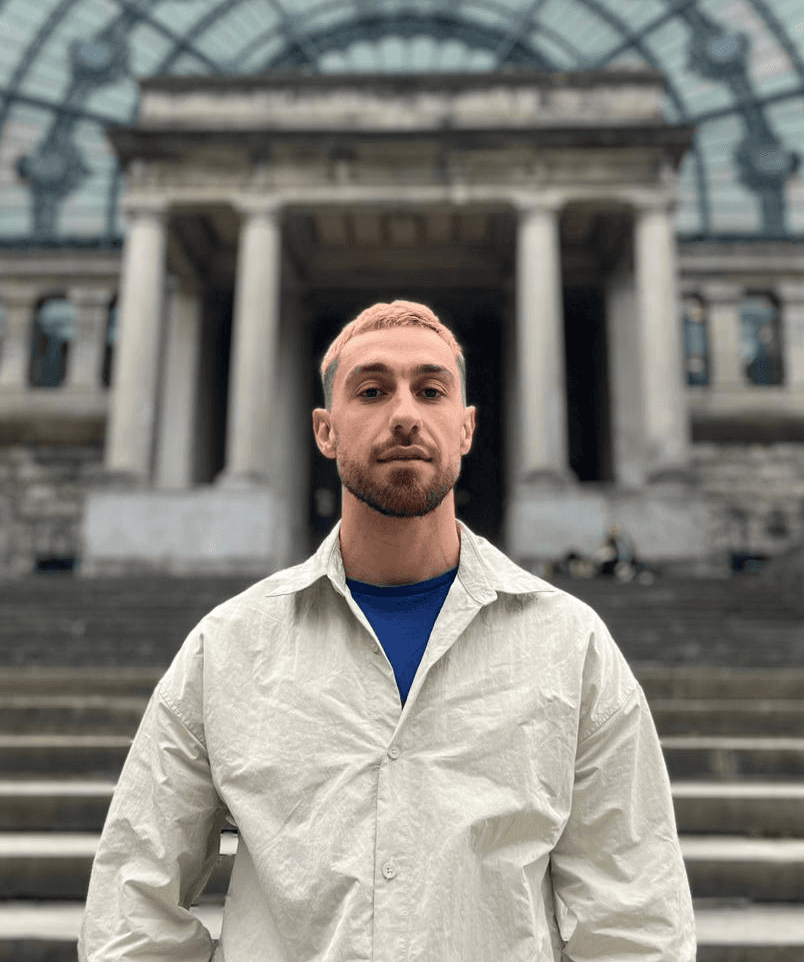
I work in dance and choreography, developing an artistic research that moves across performance, creation, and the study of body language.

After training in Italy, in 2018 I completed my studies at the Northern School of Contemporary Dance in Leeds, graduating with a Master’s degree in Contemporary Dance Performance.

Since 2019, I have collaborated with companies and artists such as Mobius Dance, Saeed Hani, Kinkaleri, gruppo nanou, and Luna Cenere, exploring different poetics and performative practices.

I have been developing a choreographic collaboration with Sara Capanna, joined by Barbara Carulli in 2021. Together, the collective created Tracce | Looking for a place to die, which received the Theodor Rawyler Prize in 2022, and Petricore, which premiered in June 2025 at the Umbria Danza Festival.

Alongside these projects, I have been developing an ongoing artistic dialogue with Lucas Delfino.
Our artistic and personal relationship led to the creation of forget-me-not and we are developing a shared research on ensembles as co-choreographers, experimenting through creative processes with students of Art Factory International, as well as in the creation of Vertigem,  developed in collaboration with seven dancers from São José dos Campos - under the direction of Lili de Grammont.

Since 2023, I have also been developing personal projects structured around two lines of research: on surroundings and on childhoods.
The research on surroundings includes There is a Planet, my first personal work, and Dead River, set to premiere in 2026.
The research on childhoods includes the solo Papillon and Used to play Alone, currently in its early research phase.

I am currently based in Brussels, while developing my work between Italy and Belgium.

Pedagogy and
Embodied Research

Alongside my choreographic and performance practice, I work in both educational and professional teaching contexts.

Over the past three years, I have been teaching as a guest teacher at Art Factory International, guiding international students through creative processes, improvisation, and technical practices including pre-acrobatics, floorwork, and contemporary ballet. Since the 2026/27 season, I will be teaching periodically at Junior Ballet Project, working with a smaller group of pre-professional dancers.

In 2023, I graduated in Psychological Sciences and Techniques from the University of Florence, where my research focused on embodied practices and the relationship between body, perception, and psychological processes.

This academic background informs both my artistic and pedagogical practice. I am particularly interested in creating learning environments that support technical development, creative autonomy, and awareness of physical and perceptual processes through movement.

This interest also extends into participatory and interdisciplinary workshop formats, where choreography becomes a tool to explore memory, identity, and collective transformation through embodied experience. One example is the laboratory: se cambiamo forma, cambiamo memoria?

se cambiamo forma, cambiamo memoria?
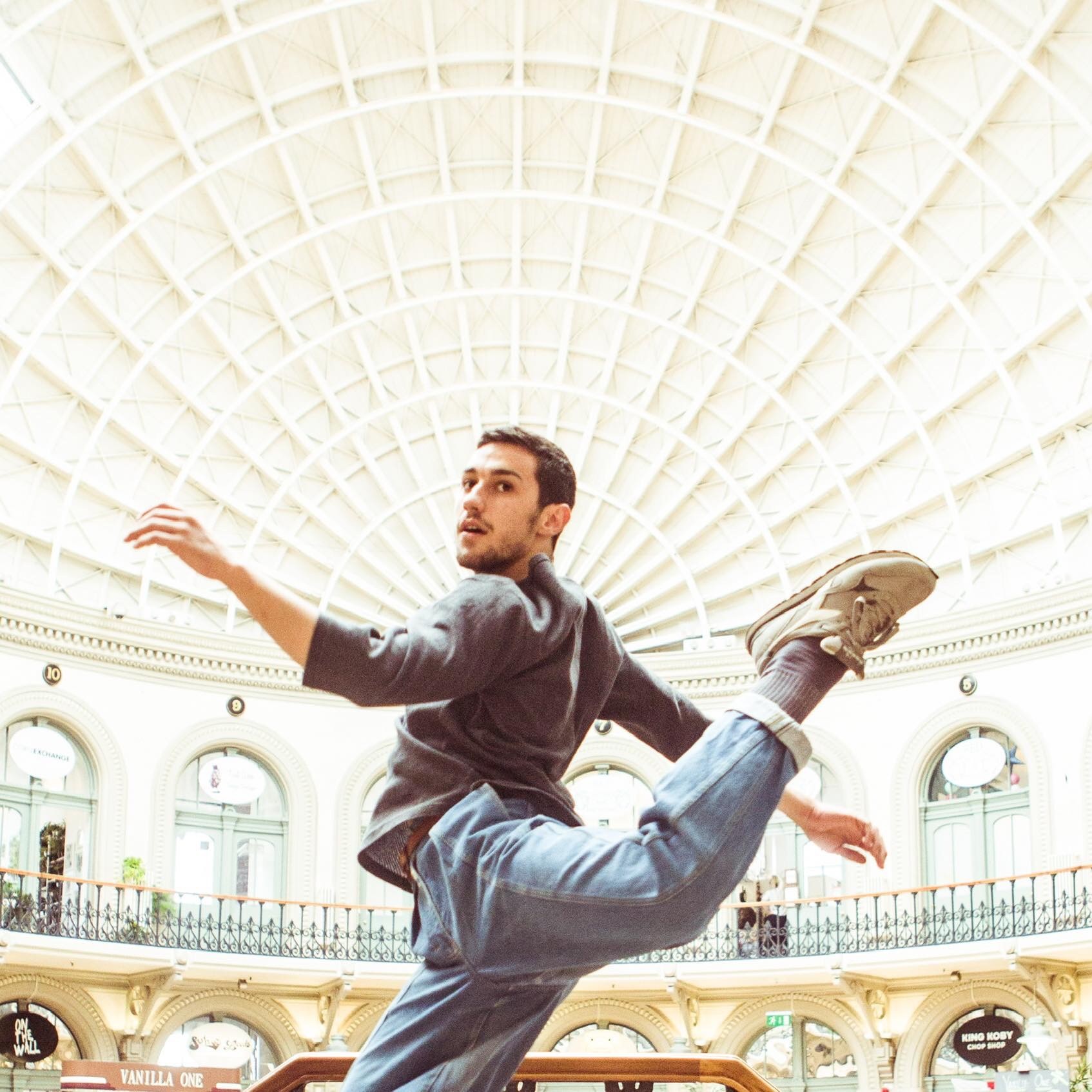
This experiential workshop, developed firstly for teenagers and fine arts students, investigates the relationship between memory, body, and transformation through performative and visual practices.

The workshop unfolds in three phases:

In the first phase, participants are invited to reconnect, through movement in space, with a childhood memory in which they experienced exclusion from play, particularly in relation to gender dynamics. The memory is not approached as a process of reliving trauma, but rather as an opportunity to observe how the body reacted and adapted to that experience. 

The memory is then translated into a corporeal shape and subsequently into four drawings. These drawings are handed to an illustrator, who reworks them digitally and projects them one by one onto a shared screen. By observing both their own forms and those of others, participants select two shapes created by someone else, embody them physically, and redraw them, activating a process of transformation, resonance, and collective re-elaboration.

The second phase focuses on observing the illustrator’s live digital manipulation and projection process. Here, participants become aware of the continuous transition between memory, body, drawing, and digital image, in a dynamic similar to a “telephone game,” where each translation subtly alters the original form. This phase concludes with an open discussion between participants, facilitator, and illustrator.

In the final phase, participants work in groups of four within a performative space. Each group constructs two different spatial structures (lines, diagonals, circles, grids) using their bodies, attempting to maintain a shared physical form while transitioning between configurations.

An introductory video documenting the first iteration of the workshop is available here.

LINK

This experiential workshop, developed firstly for teenagers and fine arts students, investigates the relationship between memory, body, and transformation through performative and visual practices.

The workshop unfolds in three phases:

In the first phase, participants are invited to reconnect, through movement in space, with a childhood memory in which they experienced exclusion from play, particularly in relation to gender dynamics. The memory is not approached as a process of reliving trauma, but rather as an opportunity to observe how the body reacted and adapted to that experience. 

The memory is then translated into a corporeal shape and subsequently into four drawings. These drawings are handed to an illustrator, who reworks them digitally and projects them one by one onto a shared screen. By observing both their own forms and those of others, participants select two shapes created by someone else, embody them physically, and redraw them, activating a process of transformation, resonance, and collective re-elaboration.

The second phase focuses on observing the illustrator’s live digital manipulation and projection process. Here, participants become aware of the continuous transition between memory, body, drawing, and digital image, in a dynamic similar to a “telephone game,” where each translation subtly alters the original form. This phase concludes with an open discussion between participants, facilitator, and illustrator.

In the final phase, participants work in groups of four within a performative space. Each group constructs two different spatial structures (lines, diagonals, circles, grids) using their bodies, attempting to maintain a shared physical form while transitioning between configurations.

An introductory video documenting the first iteration of the workshop is available below.

LINK

Modelling Experiences

with Manuel bravi

with Vincent Urbani

Menu

Close

Menu

Close